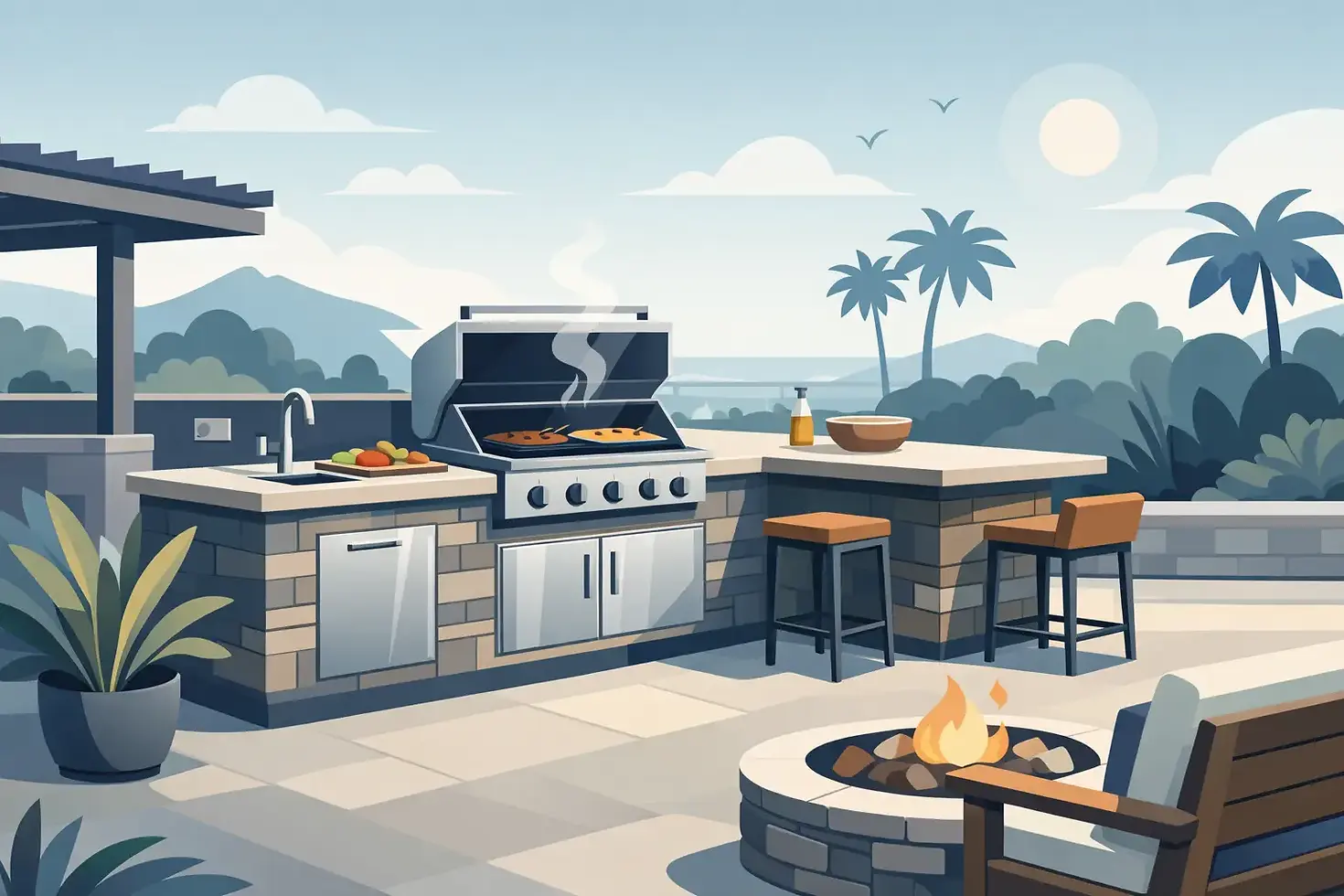
Custom Grill Island Builder That Lasts

A grill island should not feel like a dressed-up patio accessory. It should feel built - solid under the counter, tight at every joint, and ready for heat, rain, salt air, and weekend use that turns into year-round living. That is why choosing the right custom grill island builder matters. The difference shows up in the frame you cannot see, the finishes you touch every day, and the way the whole kitchen holds its shape and appearance over time.
For homeowners investing real money into their backyard, this is not about adding a grill and a counter. It is about creating a permanent cooking space that fits the way you entertain, the way you cook, and the way your home presents itself. A true custom build should perform like part of the house, not like a temporary outdoor upgrade.
What a custom grill island builder actually builds
A lot of companies use the word custom loosely. Sometimes it means choosing from a few standard layouts and surface colors. That is not the same as a true custom grill island.
A real custom grill island builder starts with your space, your appliance package, your traffic flow, and your priorities. Maybe you want a large grill as the centerpiece with plenty of landing space on both sides. Maybe refrigeration matters more because you host often. Maybe storage needs to be hidden cleanly behind a masonry-style finish that fits the architecture of your home. The build should respond to those choices from the frame out.
That matters because every outdoor kitchen has to solve practical problems. Heat needs clearance. Counters need usable depth. Door and drawer placement needs to make sense while cooking. Seating cannot crowd the grill zone. Lighting, outlets, and utility runs all need to work without making the island feel forced or oversized. Good design is not guesswork. It is layout discipline backed by fabrication experience.
Why build quality matters more than the brochure
Outdoor kitchens get sold with pretty renderings all the time. What matters more is how the structure is built when the finish goes on. If the frame is weak, poorly fastened, or not designed for exterior conditions, the kitchen can shift, swell, loosen, or show wear far earlier than it should.
That is where a fabrication-driven builder stands apart. Welded 1x2x1/8-inch aluminum tubing creates a strong, stable frame that is well suited for harsh outdoor conditions, especially in hot, humid, coastal climates. Add stainless steel hardware, well-planned attachment points, and durable architectural finishes, and the island becomes a real exterior structure rather than a cosmetic shell.
This is especially important in Florida. Heat, moisture, storms, and salt exposure are hard on outdoor materials. A kitchen that looks fine on install day can become a maintenance headache fast if it was not engineered for the environment. A builder who understands climate-specific construction is not upselling durability. They are protecting your investment.
What to expect from a custom grill island builder
The right builder should ask better questions than a general contractor or patio installer. They should want to know how often you cook outside, what kind of equipment you use, how many people you typically host, and whether the space is centered on serious grilling, casual family use, or full-scale entertaining.
They should also look closely at the site itself. A tight lanai, open pool deck, or covered outdoor room each changes the design approach. Ventilation, access, circulation, and finish selections all depend on the setting. There is no one-size-fits-all answer, and that is the point.
You should also expect material transparency. If a builder cannot clearly explain what the frame is made of, how components are secured, or why certain finish systems are used outdoors, that is a problem. Homeowners making a premium investment deserve direct answers about structure, not just style boards and appliance talk.
Design choices that make a grill island better to use
The best grill islands are not just durable. They are easy to live with. That comes down to design details that many people only notice after the project is finished.
Counter space is the first one. Most homeowners underestimate how much room they need around the grill. You need enough area for prep, platters, tools, and the ordinary mess that comes with real cooking. A cramped island can still look impressive, but it will not feel efficient once the food comes out.
Storage is another major factor. Access doors and drawers should support how you cook, not just fill empty panel space. If the grill tools are on one end and the trash pullout is on the other, the layout starts working against you. When the island is truly custom, storage can be positioned with purpose.
Finish selection also deserves more thought than people usually give it. A high-end outdoor kitchen should complement the home and reduce maintenance, not create more of it. Textured and architectural facade finishes often make far more sense outdoors than overly fussy surfaces that show every mark and require constant upkeep.
Then there is proportion. An island needs to fit the house, the patio, and the scale of the appliances. Bigger is not always better. If an island overwhelms the space or chokes off movement, the entire backyard becomes less comfortable. The strongest designs feel anchored and natural, not oversized for effect.
The trade-off between prefab thinking and true custom work
Some homeowners start with a simple idea - buy a grill, add a base, finish the exterior, and call it done. That can work for a lower-budget project, but it often leads to compromises in fit, function, and durability.
Prefab-style thinking tends to force the project around standard dimensions and limited options. True custom work does the opposite. It starts with the result you want and builds toward it. That usually means a better fit, cleaner integration, and stronger long-term value.
Of course, custom does require more planning. You will make more decisions, and the builder should guide those decisions with experience, not just hand you a catalog. But for homeowners who care about performance, appearance, and staying power, that extra planning is exactly what produces a better outcome.
How to judge whether a builder is the right fit
Start by looking beyond the finish photos. Ask how the structure is fabricated. Ask what materials are used in the frame. Ask how the kitchen is built for weather exposure in your region. If you are in Southwest Florida or another coastal market, that conversation should be direct and detailed, not vague.
Then pay attention to how they talk about design. A builder focused on quality will discuss clearances, support, appliance integration, finish durability, and workflow. A builder focused only on selling the job will stay at the surface level.
It also helps to look for a specialist mentality. Outdoor kitchens are their own category. They involve heat, utilities, weather, structural support, and visual integration all at once. A company that treats them like a side offering usually cannot match the precision of a builder who focuses on them every day.
Primal Outdoor Kitchens, for example, centers its work around fabrication standards and weather-ready construction, which is exactly the kind of focus homeowners should be looking for when they want more than a decorative island.
A custom grill island builder should protect resale too
Not every homeowner builds an outdoor kitchen with resale in mind, but it still matters. A well-built grill island can strengthen the appeal of the home because it feels permanent, intentional, and integrated. Buyers can tell the difference between a thoughtfully built exterior kitchen and something pieced together for appearance.
That does not mean every project should chase broad buyer preferences. You still want the space to fit your lifestyle. But there is a smart middle ground where strong materials, timeless finishes, and a balanced layout serve you now and make sense later.
The key is avoiding trendy shortcuts. Durable structure and clean design age better than flashy extras. If the island works beautifully, looks appropriate to the home, and holds up through the seasons, it keeps its value story intact.
Built for the way you actually live outdoors
The best outdoor kitchens do more than hold a grill. They make the backyard easier to use, easier to enjoy, and more connected to the rhythm of your home. That only happens when the build quality matches the promise.
A serious custom grill island builder does not start with decoration. They start with structure, then design the experience around how you cook and gather. If you want a space that feels permanent, polished, and ready for the elements, build it like it matters from day one. Your backyard will show the difference every time the grill fires up.


Comments