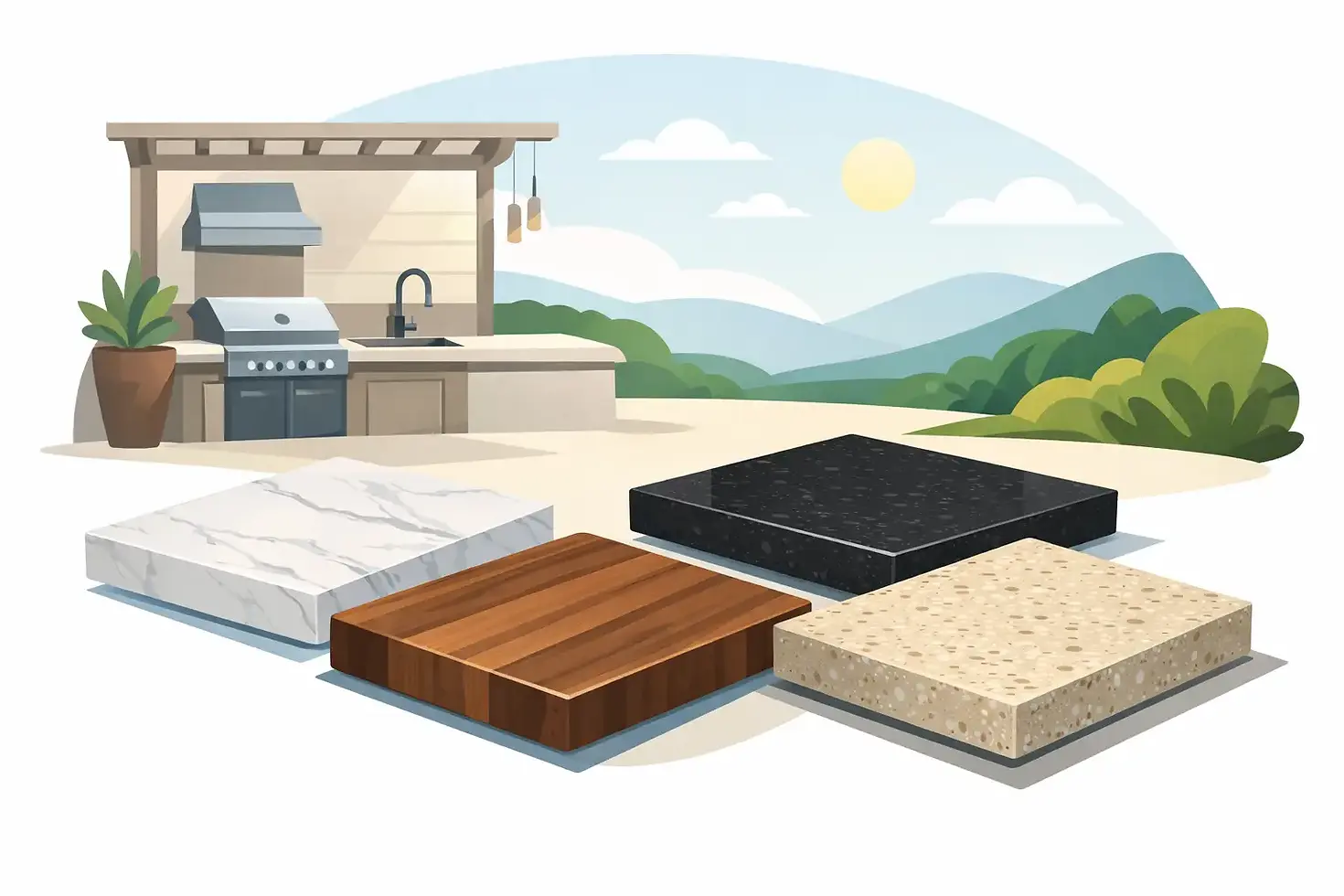
Best Outdoor Kitchen Countertop Materials

A beautiful countertop can sell the whole outdoor kitchen at first glance. Then summer hits, the grill runs hot, the rain rolls in sideways, and weak materials start showing exactly what they are. If you are weighing the best outdoor kitchen countertop materials, the right choice is not just about appearance. It is about heat tolerance, moisture resistance, maintenance, and how the surface performs year after year in a real backyard.
For homeowners building a permanent outdoor kitchen, especially in Florida-style conditions, the countertop has to do more than look sharp in listing photos. It has to handle UV exposure, humidity, spills, grease, and thermal swing without turning into a maintenance problem. That is where material choice separates a decorative setup from a true built-for-the-elements cooking space.
What makes the best outdoor kitchen countertop materials?
Outdoor countertops live a harder life than indoor surfaces. They deal with direct sun, airborne salt in coastal areas, heavy rain, dropped tools, hot cookware, and constant cleaning. A material that performs well inside can fail outside fast.
The best countertop materials for an outdoor kitchen usually share a few traits. They hold up under heat, resist moisture absorption, stay color-stable under UV exposure, and do not demand constant sealing or delicate care. Beyond that, the right pick depends on how you cook, how exposed your kitchen is, and how refined or rugged you want the finished design to feel.
That is the trade-off most homeowners need to understand early. No countertop material is perfect in every category. Some deliver premium beauty but need more upkeep. Others are nearly bulletproof but offer a narrower design range. The right answer comes from matching the material to the environment and the way the kitchen will actually be used.
Best outdoor kitchen countertop materials worth considering
Granite
Granite remains one of the strongest choices for outdoor kitchens, and for good reason. It is natural stone, it handles heat well, and when you choose the right slab, it stands up to sun and weather better than many manufactured alternatives. For homeowners who want a high-end look without sacrificing real-world durability, granite is often the benchmark.
Not every granite slab performs the same outdoors. Darker colors can get hotter in direct sun, and some highly porous stones need more frequent sealing than others. Polished finishes can also show water spots and fingerprints more easily in exposed environments. Still, with proper fabrication and the right slab selection, granite offers an excellent balance of performance, longevity, and visual impact.
For grilling spaces that see regular use, granite works hard and looks finished. It pairs well with masonry-style facades and architectural finishes, which is a big reason it continues to show up in premium custom builds.
Quartzite
Quartzite is often the smart upgrade for homeowners who love the look of elegant stone but want stronger outdoor performance than many people assume they will get from lighter, more refined surfaces. It is a natural stone, not to be confused with quartz, and that distinction matters.
Quartzite is dense, durable, and highly resistant to heat. It can handle outdoor exposure well when properly selected and fabricated. It also brings a more elevated visual style than some granites, especially if you want lighter movement or cleaner veining without stepping into a material category that struggles outdoors.
The main caution is price and sourcing. Quality quartzite can cost more, and not every slab marketed under that name is equal. Some softer stones are mislabeled in the market. That makes material knowledge and fabrication standards critical. If the goal is long-term outdoor performance, this is not the place for guesswork.
Porcelain
Porcelain has become a serious contender in outdoor kitchen design because it brings a modern look with strong resistance to UV, stains, moisture, and heat. It is non-porous, low-maintenance, and available in styles that mimic stone or concrete with impressive consistency.
For contemporary outdoor kitchens, porcelain can be a strong fit. It does not require sealing, and it performs well in wet climates. That makes it attractive in areas where humidity and rain are constant factors.
Its biggest consideration is fabrication quality. Porcelain is tough once installed correctly, but it can be less forgiving during transport, cutting, and edge treatment. A poor install can create weak points. For homeowners investing in a permanent kitchen, that means the material itself is only part of the equation. The craftsmanship behind it matters just as much.
Soapstone
Soapstone is not the most common outdoor countertop material, but it deserves consideration for the right project. It is naturally heat-resistant, non-porous, and develops character over time rather than looking worn out. If you want a surface that feels grounded, classic, and built to age honestly, soapstone has real appeal.
It tends to have a softer, darker appearance and can scratch more easily than granite or quartzite. The upside is that many scratches can be sanded or blended, and the material is less likely to crack under thermal stress than some harder stones. For homeowners who prefer natural patina over polished perfection, that can be a worthwhile trade.
Soapstone is less about glossy drama and more about substance. In the right outdoor kitchen, that works beautifully.
Concrete
Concrete often comes up in conversations about custom outdoor kitchens because it can be formed to nearly any size or shape. It offers flexibility and a handcrafted look that fits certain design styles well.
That said, concrete is not always the low-maintenance answer people expect. It is porous unless properly sealed, and even then it can stain, hairline crack, or weather unevenly over time. In hot, humid climates, those issues can show up faster if the mix, reinforcement, or sealing process is not done right.
Concrete can work, but it is usually a better fit for homeowners who fully understand the maintenance side and actually want that artisan, evolving look. If your priority is a cleaner long-term finish with less upkeep, natural stone or porcelain may be the better call.
Materials that usually do not belong in a serious outdoor kitchen
This is where many projects go off course. Some countertop materials perform well indoors but fall short outside.
Quartz is a common example. Engineered quartz is popular in interior kitchens, but direct sun and UV exposure can cause fading, discoloration, or surface damage outdoors. Laminate and tile also come with drawbacks. Laminate simply is not built for exterior punishment, while tile introduces grout lines that collect dirt, moisture, and maintenance headaches.
If you are investing in a custom outdoor kitchen, it makes sense to choose a countertop material designed for real exposure. A shortcut at the surface level usually turns into a repair bill later.
How to choose the best outdoor kitchen countertop materials for your space
Start with exposure. Is the kitchen fully exposed to sun and rain, or does it sit under a covered lanai? The more exposure your kitchen gets, the more demanding the environment becomes. Full exposure puts a premium on UV stability, low porosity, and heat resistance.
Next, think about how you entertain. If your outdoor kitchen is a true cooking zone with hot pans, active prep, sauce spills, and frequent cleanups, durability should lead the conversation. If the space functions more as a bar and serving area, you may have more flexibility to prioritize appearance.
Then consider maintenance honestly. Some homeowners do not mind periodic sealing or a bit of natural aging. Others want a surface they can wipe down and enjoy. There is no wrong answer, but there is a wrong match. A high-end outdoor kitchen should fit your lifestyle, not create another chore list.
Design matters too. Countertops do not exist in isolation. They need to work with the facade finish, appliances, edge details, and the overall architecture of the home. A surface can be technically durable and still feel out of place if it does not support the larger design.
In Florida and other coastal, high-humidity markets, climate-specific judgment matters even more. Salt air, sun load, moisture, and storm exposure put every finish to the test. That is why fabrication standards, substrate integrity, and installation quality are just as important as the slab or surface itself. At Primal Outdoor Kitchens, that build quality mindset drives every material decision, because outdoor performance starts beneath the finish line.
The strongest all-around picks
If you want the short answer, granite, quartzite, and porcelain are usually the strongest all-around options for a premium outdoor kitchen. They offer the best mix of durability, weather resistance, design flexibility, and long-term value when selected and installed correctly.
Granite is the proven workhorse. Quartzite offers a refined natural stone option with serious outdoor capability. Porcelain delivers a sleek, low-maintenance surface for more modern designs. Soapstone and concrete can also work, but they are more dependent on personal style and tolerance for trade-offs.
The best countertop is the one that still looks right and performs right after years of sun, grease, storms, and weekend cookouts. Choose for real use, not just the showroom sample. Your outdoor kitchen should feel solid every time you fire it up.


Comments