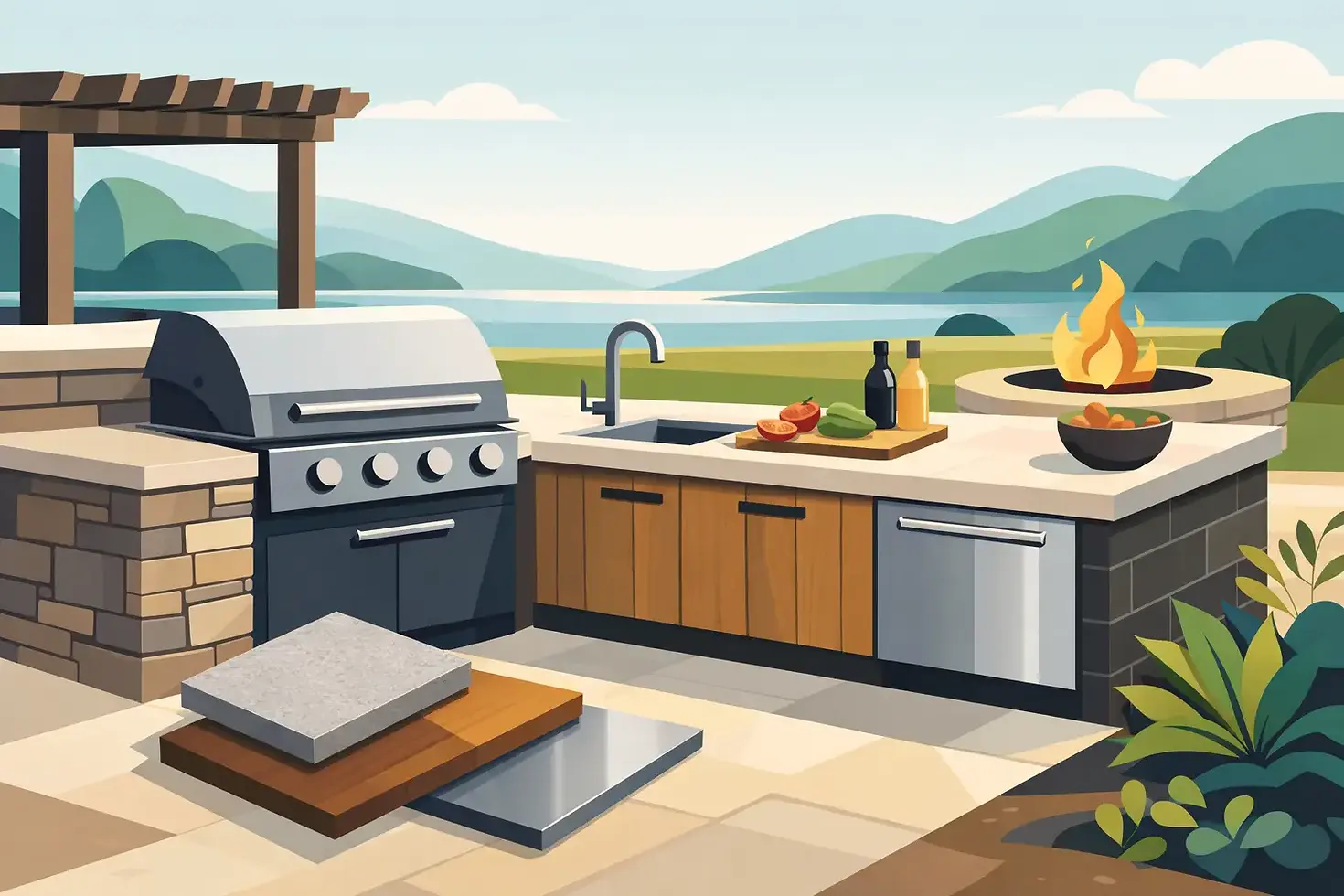
Best Outdoor Kitchen Materials That Last

A backyard kitchen can look sharp on day one and still fail fast if the wrong materials are hiding underneath. When homeowners ask about the best outdoor kitchen materials, the real question is simpler: what will still perform after years of heat, humidity, rain, UV exposure, grease, and coastal air?
That is where smart material selection matters. In Florida and other warm-weather coastal markets, outdoor kitchens are not decorative add-ons. They are permanent structures exposed to punishing conditions year-round. If the frame rusts, the fasteners corrode, the finish cracks, or the countertop stains beyond repair, the whole investment starts working against you.
What the best outdoor kitchen materials need to handle
A true outdoor kitchen has to do more than look good beside a grill. It has to manage weather swings, direct sun, moisture, cleaning chemicals, food spills, and the daily wear that comes with real use. In coastal areas, salt in the air adds another layer of abuse.
That means indoor-grade cabinets, wood framing, drywall-backed finishes, and bargain hardware are usually the wrong call. They might lower the price up front, but they create maintenance headaches and premature replacement costs later. The better approach is to build from the structure out, starting with materials chosen specifically for exterior performance.
Best outdoor kitchen materials for the frame
The frame is where durability starts. If the skeleton is weak, everything attached to it is compromised.
For high-end custom builds, welded aluminum tubing stands out as one of the best structural choices available. It is lightweight, strong, and highly resistant to rust, which makes it especially well suited for humid and coastal environments. A fabrication-driven frame built from welded 1x2x1/8-inch aluminum tubing gives the kitchen real rigidity without introducing the corrosion risk that comes with lower-grade steel systems.
That matters more than many homeowners realize. Some outdoor kitchens are framed with materials that simply are not built for long-term exposure. Wood can warp, swell, rot, or attract pests. Mild steel can rust. Even modular systems that look solid at first can loosen over time if the frame lacks real structural integrity.
A welded aluminum frame holds its shape, supports heavy finish materials, and creates a dependable base for grills, appliances, countertops, and masonry cladding. If you are building once and expecting it to last, this is one of the strongest places to invest.
Stainless steel hardware is not optional
Hardware is easy to overlook until hinges start binding, screws stain surrounding finishes, or fasteners seize up from corrosion. In an outdoor kitchen, hardware is exposed every day. Moisture, salt, and heat will quickly expose weak points.
That is why stainless steel hardware belongs in any serious conversation about the best outdoor kitchen materials. It helps protect the connection points that hold the project together and supports long-term performance in harsh conditions.
Not all stainless is equal, and not every visible metal component is as weather-resistant as it appears. Powder-coated pieces may look clean at first but still fail if the underlying material is wrong. The point is not just appearance. It is whether the hardware can keep doing its job year after year without rusting, streaking, or weakening.
Countertops that can take real outdoor use
Countertops carry a lot of visual weight, but they also take direct abuse. Hot pans, grease, drinks, food prep, rain, and constant sun exposure all land here. The right surface should be chosen for both appearance and performance.
Granite remains a strong option for outdoor kitchens because it handles heat well and holds up better outside than many engineered surfaces. It offers a premium look and a wide range of color movement, which makes it a popular fit for custom spaces. The trade-off is that some granite varieties are more porous than others, so sealing and proper selection matter.
Concrete can also work, especially in custom designs where shape and scale are part of the appeal. It delivers a bold architectural look, but it is not maintenance-free. Concrete can develop hairline cracks and may require sealing to manage staining and moisture intrusion. For homeowners who like a handcrafted, contemporary finish, it can be a strong choice, but it needs to be done well.
Porcelain slabs are gaining traction because they resist UV exposure, staining, and heat while offering a sleek, modern finish. They can be excellent in the right application, though edge details and fabrication quality are critical. A poorly handled install can undercut the benefits of the material itself.
The wrong choice is usually a surface designed more for indoor kitchens than open-air living. If it cannot handle direct weather exposure and heat, it does not belong outside.
Best outdoor kitchen materials for exterior finishes
Once the structure is right, the finish defines both style and protection. This is where many outdoor kitchens separate into two categories: those built to last and those built to photograph well for a short time.
Architectural masonry finishes are one of the smartest choices for a premium outdoor kitchen. Stone, stucco-based systems, concrete block elements, and masonry veneers can create a durable, substantial finish that matches the home and stands up to exterior conditions. They also deliver the permanent look most homeowners want when they are investing in a true backyard living space.
The key is using finish materials that are compatible with outdoor exposure and installing them over a properly built frame. Even a great-looking veneer will not perform well if the structure behind it shifts, traps moisture, or breaks down over time.
Natural stone brings depth and texture, and it works particularly well in homes where the outdoor kitchen should feel integrated into the architecture. The trade-off is weight, cost, and the need for proper support. Manufactured stone can lower cost, but quality varies, and some products age better than others in direct weather.
Stucco and textured masonry coatings can create a cleaner, more contemporary finish. They are often a strong fit for Florida-style outdoor living, but they need to be applied with climate-specific detailing to avoid cracking and moisture issues.
Cabinetry and access doors: where quality shows fast
Outdoor kitchens include more metal surfaces than many people expect. Access doors, drawer systems, appliance trims, and storage components all need to survive exposure while staying functional.
Stainless steel cabinetry components are a common choice because they offer a clean, professional look and strong weather resistance. They pair well with grills and refrigeration and make the whole kitchen feel purpose-built.
Still, this is one of those areas where shortcuts show up fast. Thin-gauge doors, low-quality welds, cheap hinges, and poor fitment can turn a premium-looking kitchen into a constant annoyance. Drawers should open smoothly. Doors should align. Finishes should hold up. If these parts feel weak in the showroom, they will not improve outdoors.
Materials to avoid in harsh climates
Some materials simply do not belong in a serious outdoor kitchen, especially in Florida. Wood framing is one of the biggest red flags. Even treated lumber has limits when it faces moisture, insects, and long-term exterior exposure.
Interior-grade cabinets are another mistake. They are not built for humidity, temperature changes, or direct weather. Laminate finishes can peel, particleboard can swell, and adhesives can fail.
Low-grade steel and mixed-metal hardware also create problems. Once corrosion starts, it spreads. What begins as cosmetic staining can become structural deterioration.
If a builder treats the outdoor kitchen like an indoor remodel placed outside, the material package is probably wrong.
Why the best outdoor kitchen materials depend on where you live
Climate always matters. A material that performs reasonably well in a dry inland market may struggle in a humid coastal one. Florida raises the standard because the combination of sun, rain, salt air, and year-round use exposes weaknesses quickly.
That is why the best outdoor kitchen materials are not just the most expensive ones. They are the ones selected for your environment, your cooking habits, and the level of permanence you expect. A casual grilling station and a fully integrated custom kitchen do not demand the same build strategy.
This is also why fabrication quality matters as much as material type. A strong material installed poorly can still fail. The right result comes from pairing proven materials with construction methods that respect load, drainage, airflow, finish compatibility, and long-term serviceability.
At Primal Outdoor Kitchens, that standard starts with welded aluminum framing, stainless steel hardware, and architectural finish systems built for Florida conditions. It is not about dressing up a weak structure. It is about building the structure correctly from the beginning.
Build for the elements, not just the reveal
The best-looking outdoor kitchen is the one that still looks and performs like it should years from now. That means choosing materials that can take the climate, support the design, and hold up under real cooking and entertaining.
If you want a backyard kitchen that feels permanent, polished, and built with purpose, start by asking what is under the finish. The right materials do more than protect your investment. They give you a space you can use with confidence every season.


Comments